
Get a real-world look at how a New Jersey bariatric, gallbladder and hernia surgeon fuels long clinical days without relying on trends or guesswork.
By Dr. Seun Sowemimo
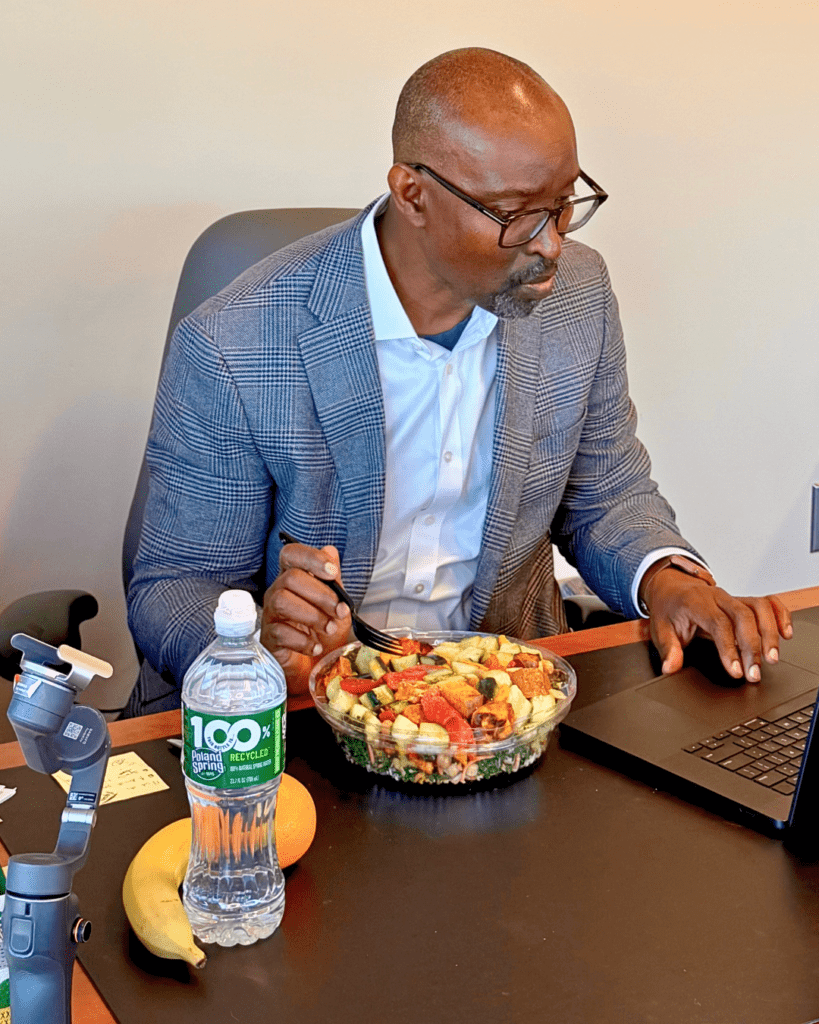
Most days, my schedule moves fast — office hours, the OR, consults, and family life layered in between. There isn’t time for elaborate meals or constant decisions around what food I’m going to eat that day. That’s intentional.
I’m often asked by patients how much I ‘practice what I preach,’ based on the guidance I offer in Dr. Seun’s Weight Loss Plan, to my bariatric patients and my GLP-1 warriors.
I eat the same lunch most days. Not because it’s exciting, but because it works for me–it fills me up and doesn’t give me the 3:00 PM sugar craving or make me sleepy (never a good idea for a surgeon.)
Why Consistent Meals Support Metabolic Stability and Weight Control
When lunch is predictable, nutrient-dense and protein-forward, it reduces decision fatigue. That matters metabolically. Stable meals help regulate blood sugar, limit cortisol spikes and reduce late-day overeating.
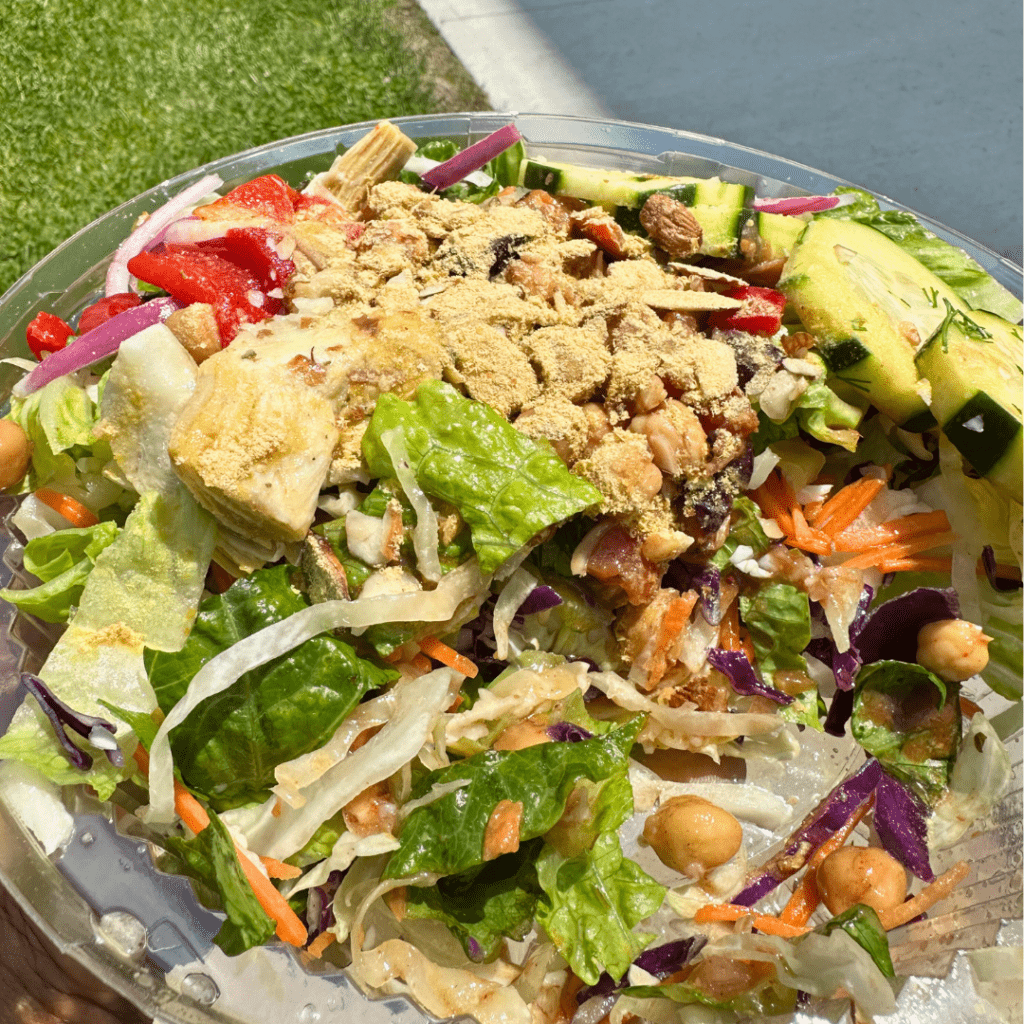
My go-to lunch is simple: plant-based protein, leafy greens, cucumbers, tomatoes, legumes (garbanzos or green peas are a favorite), peppers and healthy fats (a sprinkling of nuts and seeds.) It fuels my long surgical days without energy crashes and supports sustained energy into the evening, when I turn into Dad.
What Bariatric and GLP-1 Patients Often Get Wrong About Variety
For many of my weight management patients, consistency (good habits) — is the missing link.
Patients often believe success requires constant meal creativity. In reality, repetition improves adherence. After bariatric surgery, predictable meals support digestion, protein intake and portion awareness. For patients using GLP-1 medications, structured meals help prevent under-fueling early in the day and overeating later.
This approach isn’t restrictive. It’s efficient.
Nutrition That Supports Surgical Focus and Recovery
As a New Jersey bariatric surgeon, gallbladder surgeon and hernia surgeon, I see daily how nutrition affects inflammation, recovery and long-term metabolic outcomes. What I eat during the workday aligns with what I recommend clinically: food that supports stability, focus and resilience.
This isn’t influencer nutrition. It’s functional.
Modeling Habits Patients Can Actually Maintain

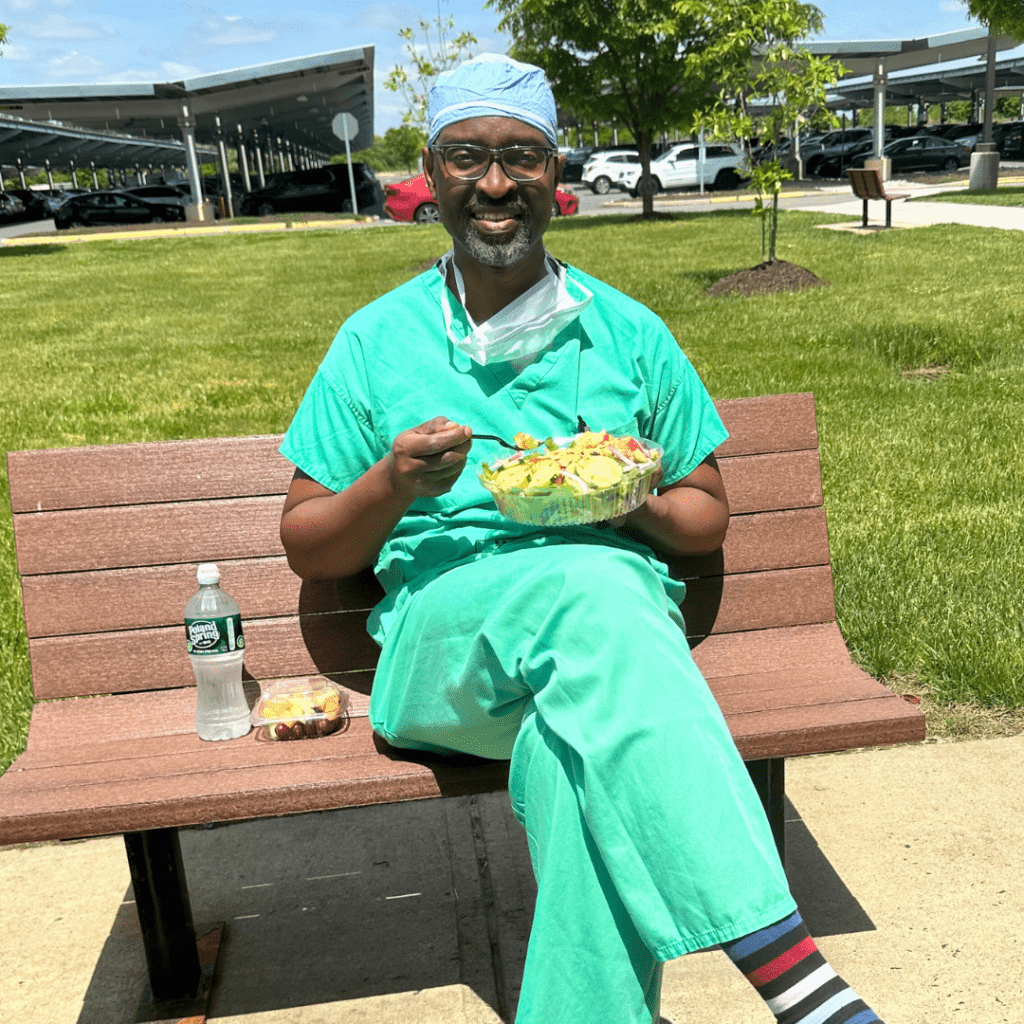
When it comes to what you eat, you don’t need to be ‘perfect’ every day. Lay groundwork for success by building patterns (good habits/healthy meals) which you can easily repeat on demanding days, stressful weeks and imperfect schedules. That’s why I eat the same lunch most days. Sometimes the smartest choice is eating the same solid meal — and letting your metabolism do its job.
Wishing you the best health possible in 2026. Should a time come when you need clinical support, I hope you’ll reach out to me.
Cheers!