

GLP-1–based medications are often positioned as alternatives to bariatric surgery. But in clinical practice working with bariatric surgery clients, they may also serve as useful tools before or after a bariatric procedure.
Semaglutide is a GLP-1 receptor agonist, while tirzepatide targets both GIP and GLP-1 receptors. Both can reduce appetite, improve satiety and support meaningful weight loss. The right treatment depends on the patient’s health, weight history, surgical goals and response to previous therapies.
For appropriately selected patients, these medications may complement—not replace—the comprehensive care provided through a bariatric surgery program:
Before bariatric surgery
- Produce initial weight loss. Losing weight before surgery may improve mobility, make healthy dietary changes easier to begin and help patients prepare physically and behaviorally for the procedure.
- Improve metabolic health. GLP-1–based treatment may help lower blood glucose and improve certain obesity-related health risks while a patient completes the bariatric evaluation process.
- Support patients with severe obesity. For some higher-risk patients, medically supervised weight loss may be used as a bridge to surgery or as part of an individualized preoperative plan.
- Provide another opportunity to evaluate treatment options. A patient’s response, tolerance and ability to continue medication can help guide the discussion about whether medication, surgery or a combined long-term strategy is most appropriate.
After bariatric surgery
- Treat weight recurrence. Some patients experience clinically significant weight regain several years after sleeve gastrectomy or gastric bypass. Medication may help restore appetite control and restart weight loss.
- Address an inadequate response. GLP-1–based therapy may be considered when a patient loses less weight than anticipated or reaches an early, persistent plateau.
- Reinforce long-term weight management. Medication can be combined with nutrition counseling, physical activity, behavioral support and continued bariatric follow-up.
- Potentially avoid or delay any need for bariatric revision surgery. Medication may be a reasonable first step when weight recurrence is not caused by an anatomical problem requiring surgical correction.
Evidence supporting postoperative use is developing. A 2024 retrospective cohort study found that both semaglutide and tirzepatide produced meaningful short-term weight loss in patients with weight recurrence after sleeve gastrectomy, with greater average weight loss observed in the tirzepatide group. Longer-term research is still needed.
Important Note: Patients should never start, stop or adjust weight loss medications without medical guidance from a bariatric professional.
Medical weight loss drugs affect gastric emptying, and instructions before anesthesia must be coordinated among the prescriber, surgeon and anesthesia team. Current multisociety perioperative guidance recommends an individualized assessment rather than one universal rule for every surgical patient.
At Prime Surgicare, GLP-1 tirzepatide and semaglutide weight loss medications are exclusively prescribed and overseen by Dr. Seun Sowemimo, a New Jersey board-certified bariatric surgeon and obesity specialist.
Book your prompt GLP-1 consultation with Dr. Sowemimo
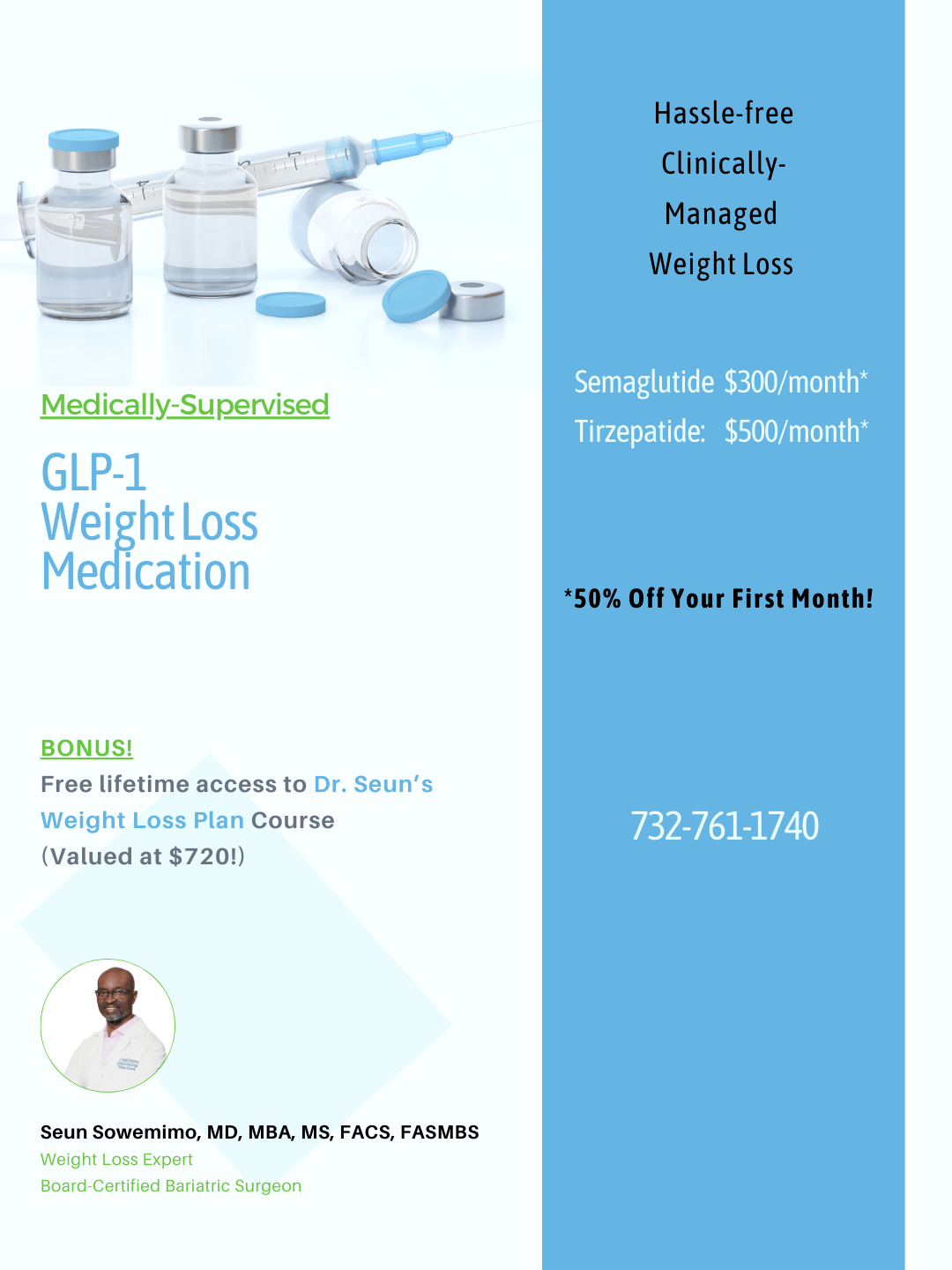
To discuss bariatric surgery, semaglutide, tirzepatide or weight recurrence after surgery, schedule an appointment with Dr. Seun Sowemimo online or call Prime Surgicare at 732-761-1740. Learn more about our exclusive savings offer for new GLP-1 clients.